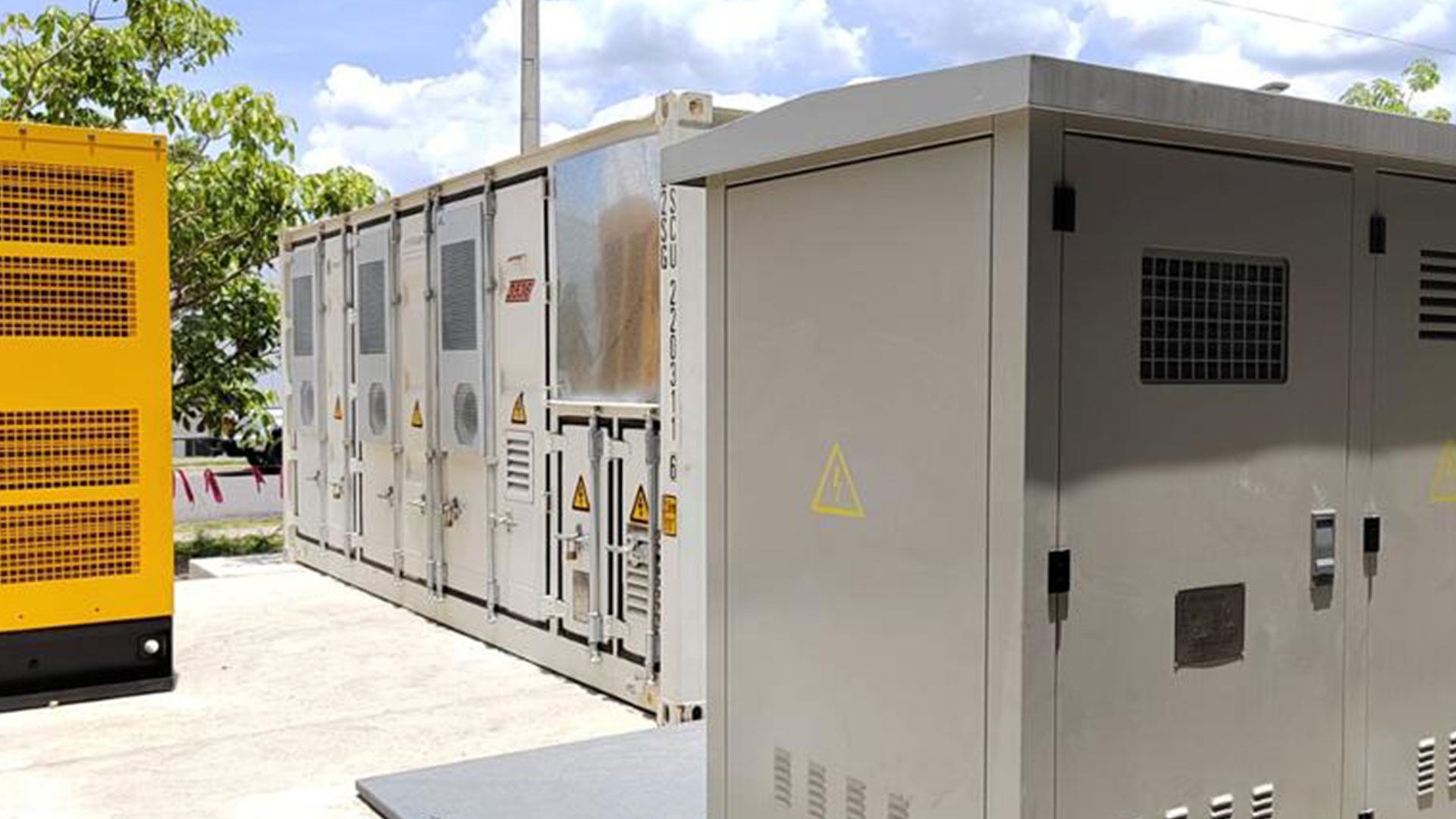
The Dutch government wants 110 GWh of battery storage by 2040, roughly fifty times the 2.1 GWh the country had at the end of 2025. The figure comes from the Energy Storage Policy Agenda (Beleidsagenda Energieopslag), sent to parliament on November 9, 2026, and drawn up with the parties that will have to make it work: the grid operators united in Netbeheer Nederland, the industry association Energy Storage NL, regional governments and the regulator ACM.
Energeia reported it as a forceful scale-up of battery capacity.
We read the agenda the way everyone in this sector did: looking for our own work in it. It was there. This article sets out what the agenda says, what it leaves open, and what it means for a business whose growth is stuck behind grid congestion (netcongestie).
The agenda at a glance
• Published: November 9, 2026
• Guide value for 2040: 110 GWh of battery capacity and 28 GW of power
• Installed at the end of 2025: about 2.1 GWh
• Actions agreed: 25
• Parties: the Dutch government, Netbeheer Nederland and Energy Storage NL, with the ACM and regional governments
What does the Energy Storage Policy Agenda say?
The agenda commits government, grid operators and the storage sector to 25 actions that should make batteries faster to permit, easier to connect and more useful to the grid. According to the government’s announcement, it is the first time the Netherlands has set a guide value (richtwaarde) for large batteries.
The 110 GWh covers every kind of battery: stand-alone systems, batteries co-located with solar and wind farms, home batteries and vehicle-to-grid. At 28 GW of power, it assumes four hours of storage on average.
Three themes run through the actions.
• Faster permitting. Grid operators, the storage sector and regional governments commit to working together so that permits for large batteries are issued sooner and more consistently.
• Flexible connections as the standard. Large batteries are to be connected with a flexible contract by default, with agreed conditions and compensation for batteries that help relieve the grid.
• Storage tied to grid capacity. The government wants storage built where the grid can use it. TW.nl reports that well-deployed storage can reduce the required grid investment by up to €4 billion.
Can a business grow without a larger grid connection?
Yes, in many cases. A battery behind the meter, meaning on the customer’s side of the grid connection, lets a business use more power on site than the connection alone would allow.
This is the question most of our customers arrive with. They have the orders, the machines and the plans; what they lack is capacity on the cable, and the wait for a heavier connection can run for years.
A battery changes the arithmetic. It charges when the site draws little and discharges when demand peaks. This is peak shaving: the peak the grid sees stays inside the contracted capacity. The business adds production lines, truck chargers or cooling. The connection stays the same size.
Two examples from our own projects. A-Gas in Eygelshoven expanded a plant that runs 24 hours a day on its existing connection; Bieze Food Group and QSTA powered four expansion phases behind a grid cap.
No two sites are alike. A cold store runs a different load profile than a logistics depot with electric trucks, which is why every battery energy storage system (BESS) we deliver is engineered to the site and its goals, with integration, operation and maintenance under one umbrella.
Why does steering decide whether a battery helps the grid?
Because grid congestion is a matter of timing. The grid is full at some hours and has room at others. A battery that follows those hours charges when there is room and delivers when demand peaks, which lowers the load on the cables at the moments they are fullest. The agenda calls this grid-aware (netbewust) storage.
It is also why the agenda makes flexible contracts the default for large batteries. Under such a contract, the grid operator and the battery owner agree on when the battery can charge and discharge, and the owner is compensated for helping to relieve the grid.
For an operator, it means the hardware is half the work. The other half is software, market access and people who watch the system through the night. At Ampowr that is Cosmos EMS, our energy management system, together with our energy trading team and 24/7 support. They decide, minute by minute, when a battery charges, when it discharges and when it holds back for the grid operator.
What is still undecided?
Several of the rules, and much of the detail. An agenda is a list of commitments; the regulations and the budgets still have to follow. The government says as much: the sector is growing, though too slowly to reach 110 GWh on its present course.
Some of the parts that weigh heaviest in a business case are still under study, lower grid tariffs for batteries among them. Permitting gets faster only when municipalities, provinces and grid operators apply the new approach in practice. That takes time.
And yet. For the first time the direction is on paper, with the grid operators and the regulator at the same table. A business that invests in storage now is investing in line with national policy.
What should a business facing grid congestion do now?
Start with three questions. If your growth is waiting on a grid connection, the answers may show it does not have to.
1. How much of your planned growth fits within your current connection once a battery covers the peaks?
2. What can the battery earn on the energy markets in the hours your site does not need it?
3. Who operates the system once it is installed, and who answers when something happens at night?
We are glad to work through them with you. Get in touch with our team to look at your site and your load profile, or request a quote directly.