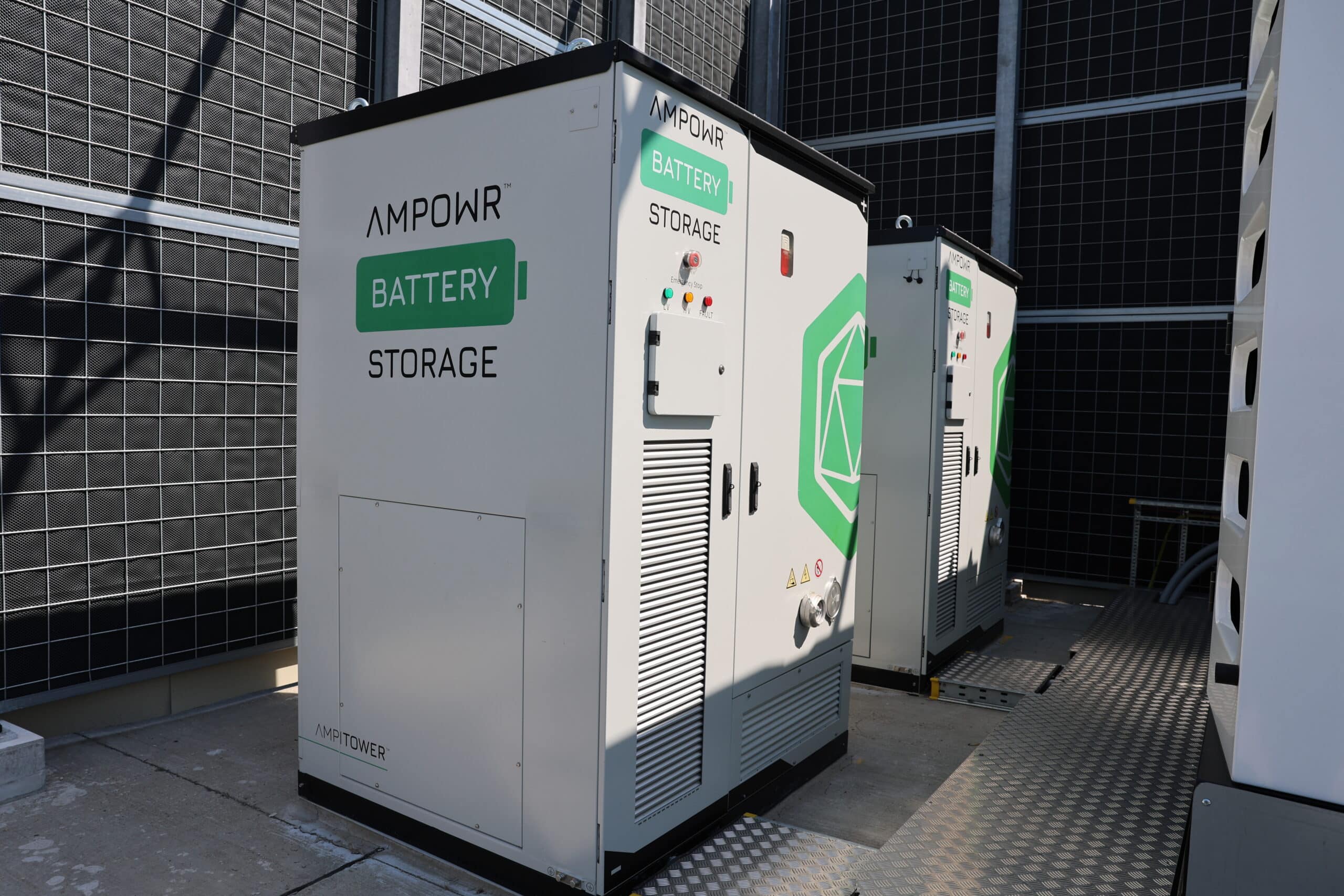
Businesses facing grid congestion (netcongestie) in the Netherlands can reduce risk and unlock growth by investing in Battery Energy Storage Systems (BESS). The Dutch government, in recognition of the long term potential of BESS (energieopslag), offers several financial incentives through the Rijksdienst voor Ondernemend Nederland (RVO).
This article explores how businesses investing in BESS can find the best subsidy and financing options for their specific case through the Dutch government and the Netherlands Enterprise Agency (RVO).

Energie-investeringsaftrek (EIA)
The Energy‑Investeringsaftrek or Energy Investment Allowance (EIA) is one of the most powerful fiscal incentives available for Dutch businesses looking to invest in energy-efficient technologies, including battery energy storage systems. This scheme allows companies to deduct up to 40% of eligible investment costs from their taxable profit, effectively lowering corporate income tax and improving cash flow. Naturally this can be a major benefit when planning capital-intensive energy projects with the intention of improving company sustainability.
And to make the deal more compelling, in 2026 as part of the Dutch government’s growing support for future-facing solutions such as BESS, there is an additional €29 million available for the tax reduction compared to 2025, amounting to a grand total of €460 million.
For whom is the EIA relevant?
The EIA is intended for all entrepreneurs subject to income tax or corporate tax. Government organizations, foundations, and associations can also use the EIA if they pay corporate tax. The scheme is not available for private individuals.
How the EIA works
Eligibility – To qualify, your battery system or related energy technology must appear on the RVO’s official Energy List. You can use this link to search for relevant BESS listings, of which there are several. This list ensures that only certified, energy-efficient technologies receive the tax benefit.
Tax Deduction Mechanics – The Energy Investment Allowance (EIA) allows companies to deduct up to 45% of the cost of eligible energy-efficient investments, such as battery energy storage systems, from their taxable profit. Exact savings depend on your corporate tax rate and the size of your taxable profit, so results may vary.
Tips to Maximize EIA Benefits
Plan Ahead – Ensure your equipment and use purpose is listed on the RVO’s Energy List before purchase.
Document Costs Accurately – Maintain detailed records of eligible expenditures to streamline tax filing.
Combine Strategically – Explore other subsidies (such as those listed in this article) or fiscal tools that complement EIA for maximum savings.
SPRILA
SPRILA (Subsidie voor Private Laadinfrastructuur) is a Dutch subsidy designed to support companies and organizations installing private electric vehicle (EV) charging infrastructure. Important to note that this subsidy specifically applies to private charging point setups, not those placed on public or open space.
Eligible Costs – SPRILA covers part of the investment in charging stations and associated infrastructure, such as BESS.
Subsidy Rate – Typically, the subsidy covers a percentage of eligible costs (check the current RVO guidelines for exact figures). This can make installing EV chargers more financially feasible.
Integration With Batteries – Combining private charging infrastructure with a battery energy storage system allows businesses to:
There is a specific subsidy ceiling of €18.5 million for BESS in SPRILA 2026. The application period is open up until 18 December 12:00.
SPULA
In short, whereas SPRILA targets private charging infrastructure, SPULA focuses on public charging infrastructure. SPULA stands for the Subsidy for Public Charging Infrastructure for Heavy Electric Vehicles, known in Dutch as Subsidieregeling Publieke Laadinfrastructuur Zwaar Vervoer.
This subsidy supports businesses in building or expanding publicly accessible charging locations across the Netherlands. It offers significant financial incentives for ultra-fast charging stations and stationary battery energy storage systems. Exact amounts depend on the type of installation; check the current RVO guidelines for the most up-to-date figures.
Flex-e
The Flex‑e subsidy is the most targeted support for companies in grid congestion areas. The RVO also provides a flash sheet (in Dutch) on Flex-e, providing insights on which solutions are available, what they might cost, and the possibilities for BESS within the frame of the subsidy. Designed specifically to help businesses adapt their electricity use in congested grid zones, it consists of three distinct components:
Flexibility Scan – Funding to assess how your electricity consumption can be used more flexibly.
Feasibility Study – Funding to evaluate which technical and financial solutions (including battery storage) are viable.
Implementation Measures – Capital support to invest in electricity flexibility measures, such as batteries or Energy Management Systems (EMS).
The Flex-e subsidy is expected to re-open for requests in Spring 2026.
Additional relevant subsidies and financing options
Demonstratie Energie- en Klimaatinnovatie (DEI+)
Offers funding for pilot or innovative projects that incorporate energy storage systems, subject to specific requirements.
Sector‑Specific or Property Subsidies
Some regional or sector‑targeted subsidies for energy upgrades may include batteries as part of broader energy‑efficiency packages.
Conclusion
Battery storage systems offer a compelling solution for companies constrained by grid congestion in the Netherlands. With support from the Flex‑e subsidy, EIA tax advantages, and a range of other incentives, businesses can significantly reduce investment costs while boosting flexibility and sustainability.
By planning strategically and aligning with subsidy cycles, investing in battery storage can support growth, reduce energy costs, and help future‑proof your business against grid limitations.
Get in touch with us
From first talks and design to tailored installation and ongoing support for your battery energy storage systems, Ampowr provides a full-stack solution all under one provider.
This article is for informational purposes only and does not constitute financial or legal advice. Subsidy conditions and amounts are subject to change. Always consult RVO or a qualified advisor for guidance specific to your situation.