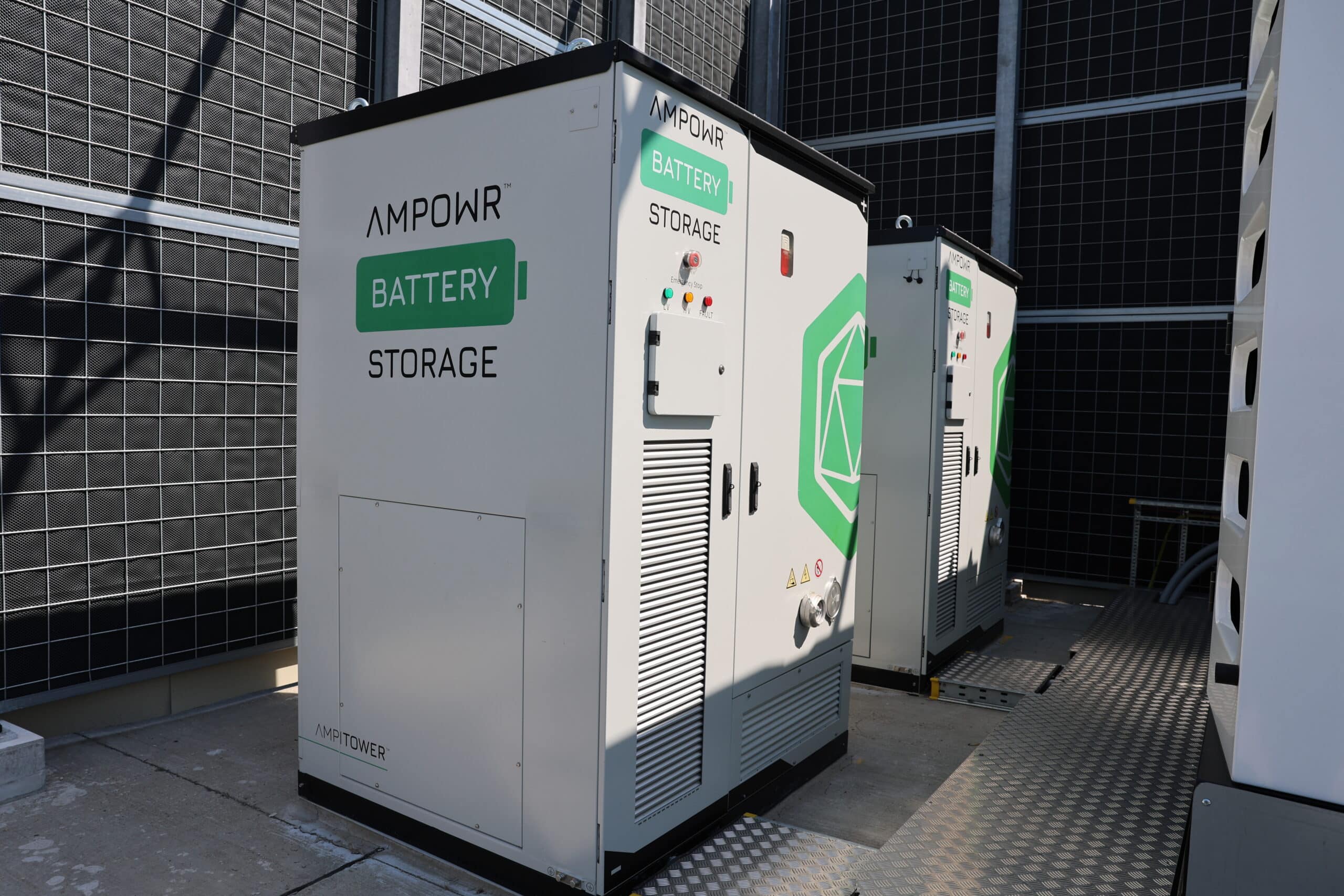
Battery energy storage systems for data centers
Grid congestion, not land or capital, now plays a major factor in deciding whether a site can grow. A battery run by Cosmos EMS makes the site a congestion-relieving asset that grid operators can prioritize, cuts generator hours to a figure you can report, and holds the load when the generator does not start. Hardware, software, and service all under one contract.

The shift in data center power strategy
Data center energy challenges
Data centers have long been engineered around one priority: uptime. Grid supply, a UPS for bridging, and diesel generators for extended outages. Now, two things have changed the the industry entirely.
Demand. GPU-dense compute produces load profiles that architectures were never designed for. Training runs and inference bursts create sharp, irregular peaks, and those peaks now drive overall operating costs, not only continuity risk.
The grid. Across continental Europe capacity is full in exactly the places data centers want to be. Demand is rising, making growth increasingly inaccessible.
Three reasons a battery earns its place on site
What a BESS does for a data center
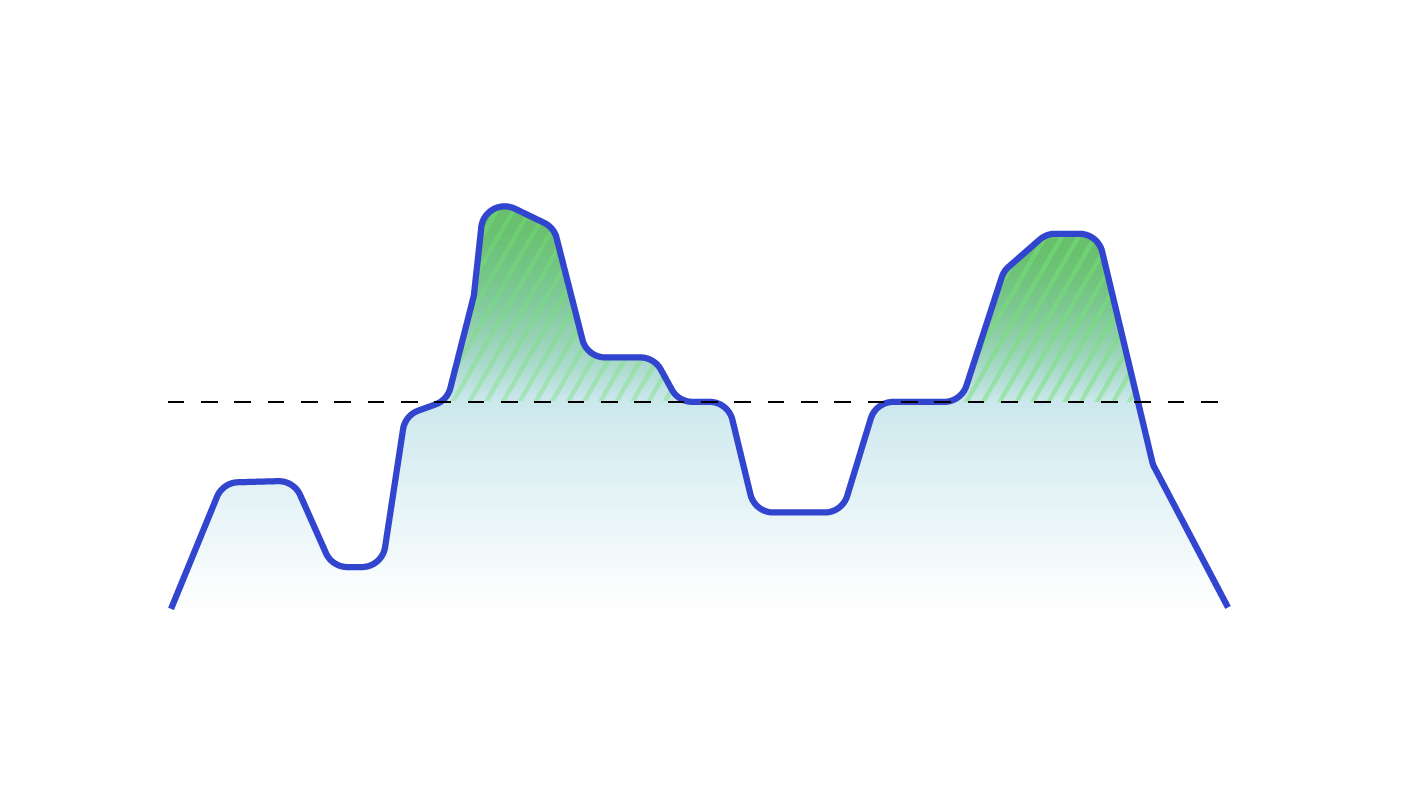
The value comes from stacking functions on the asset. Congestion management comes first, because it decides whether the site can grow. Then generator hours, the part tenants and regulators now ask to see evidenced. Then a backup layer independent of the first. Lower peak costs and grid-service revenue run on the same battery.
01.
Congestion management
A battery repositions the site as a congestion-relieving, flexibility-providing asset, the top priority category under the connection-prioritization frameworks spreading across European markets.
Ampowr can run that negotiation with you as the intermediary: the congestion-management agreement with the network operator, and the service-provider and aggregator arrangements that turn measured flexibility into capacity the site can contract.
02.
Fewer diesel hours
Colocation and hyperscale tenders ask for carbon intensity, diesel run hours, and renewable matching. CSRD and taxonomy reporting reward reductions that can be measured. A battery answers with operating data from the meter rather than estimates.
Generator runtime also sits behind emissions permitting, noise limits, and community objection, so reducing it eases all three.
03.
Another layer of backup
The battery sits behind the UPS as a second independent line of defense, not a duplicate of the first. Different energy source, no start sequence to fail, monitored continuously, so readiness is a known quantity rather than an assumption tested monthly.
Cosmos EMS holds a reserve state of charge that trading and peak shaving will not encroach on. AmpiHealth reports whether that reserve is genuinely deliverable rather than nominally present.
The battery extends the stack, it does not replace it
The power stack, before and after BESS
Software decides the outcome
Energy strategies in data centers
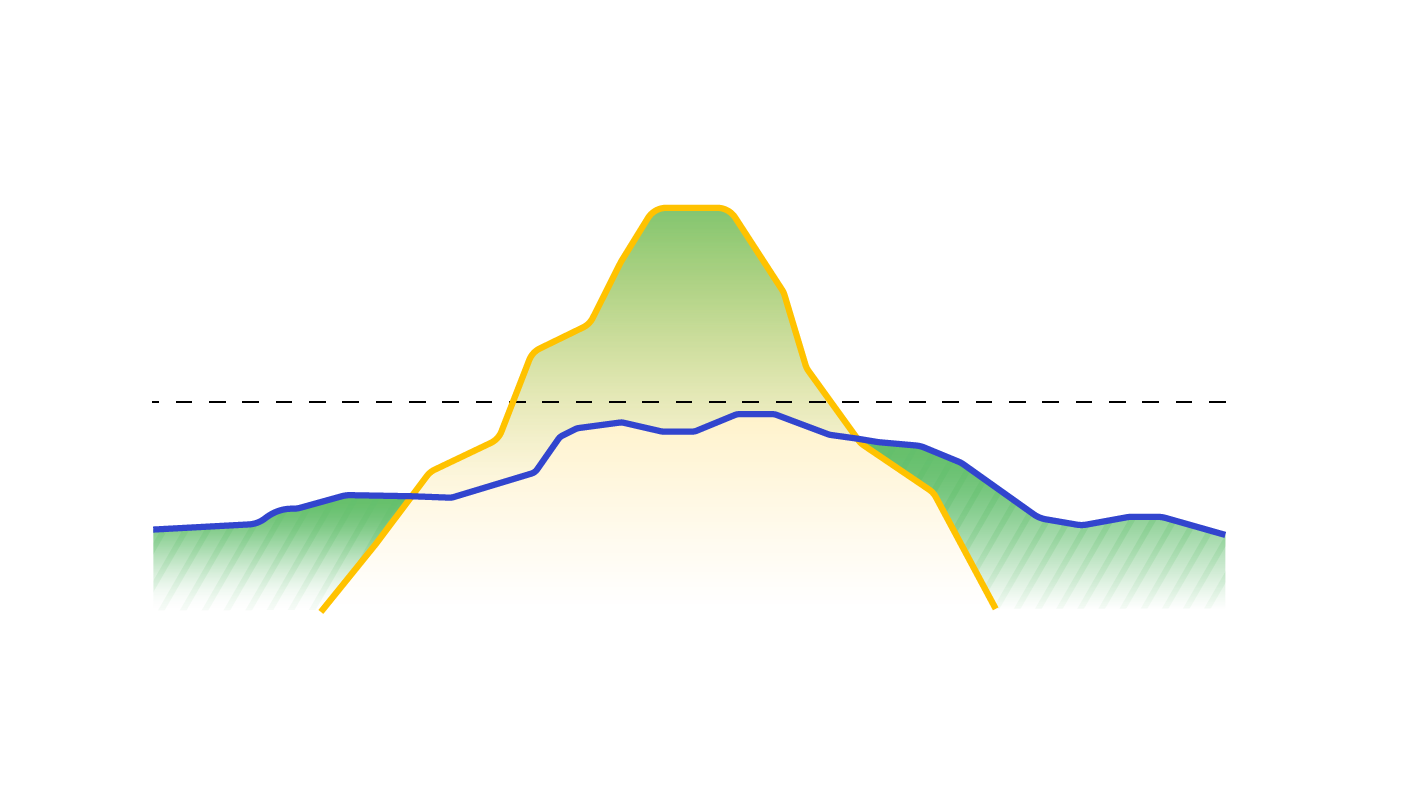
Cosmos EMS resolves backup readiness, peak cost, and grid participation in real time, against one set of constraints. Without it the hardware is a passive asset.


Prospecting, financing, and contracts, not only the hardware
What Ampowr covers
Most operators do not want a battery. They want a connection, a lower energy bill, and a backup layer they can defend to the board and the regulator. We cover the path to that outcome, from the first site visit to the twentieth year of operation, under one point of accountability.
01.
Prospect and assess
Site prospecting in congested areas, including where a flexible connection is realistic and where it is not.
On-site inspection, load-profile analysis, and feasibility against your connection, tariff, and resilience position, including the case for doing nothing yet.
02.
Contract and finance
Support in structuring financing, so the asset need not sit on your balance sheet.
Mediation of energy service, offtake, and service-provider contracts, plus subsidy and flexibility-scheme guidance in your market. Scheme rounds are budget-capped, so timing matters as much as qualifying.
03.
Engineer and build
Full EPC delivery, integrated alongside the existing UPS and generators with no change to the protected load path.
Grid-operator coordination, permitting, and commissioning.
04.
Operate
Cosmos EMS for scheduling, optimization, and grid-service dispatch.
AmpiHealth state-of-health monitoring, AmpiSERV maintenance, and managed backup power with reserve held for extended outages.
Dedicated to accelerating the energy transition
Your trusted partner in energy solutions
With 15 years of experience in battery technology, we handle system design, project management, installation, grid services, and maintenance. We keep the asset compliant and keep optimizing the strategy it runs on.
The EMS that controls the battery sits inside the security perimeter, which makes it a security question as much as an energy one. Cosmos is certified to ISO 27001 and designed for NIS2 compliance.
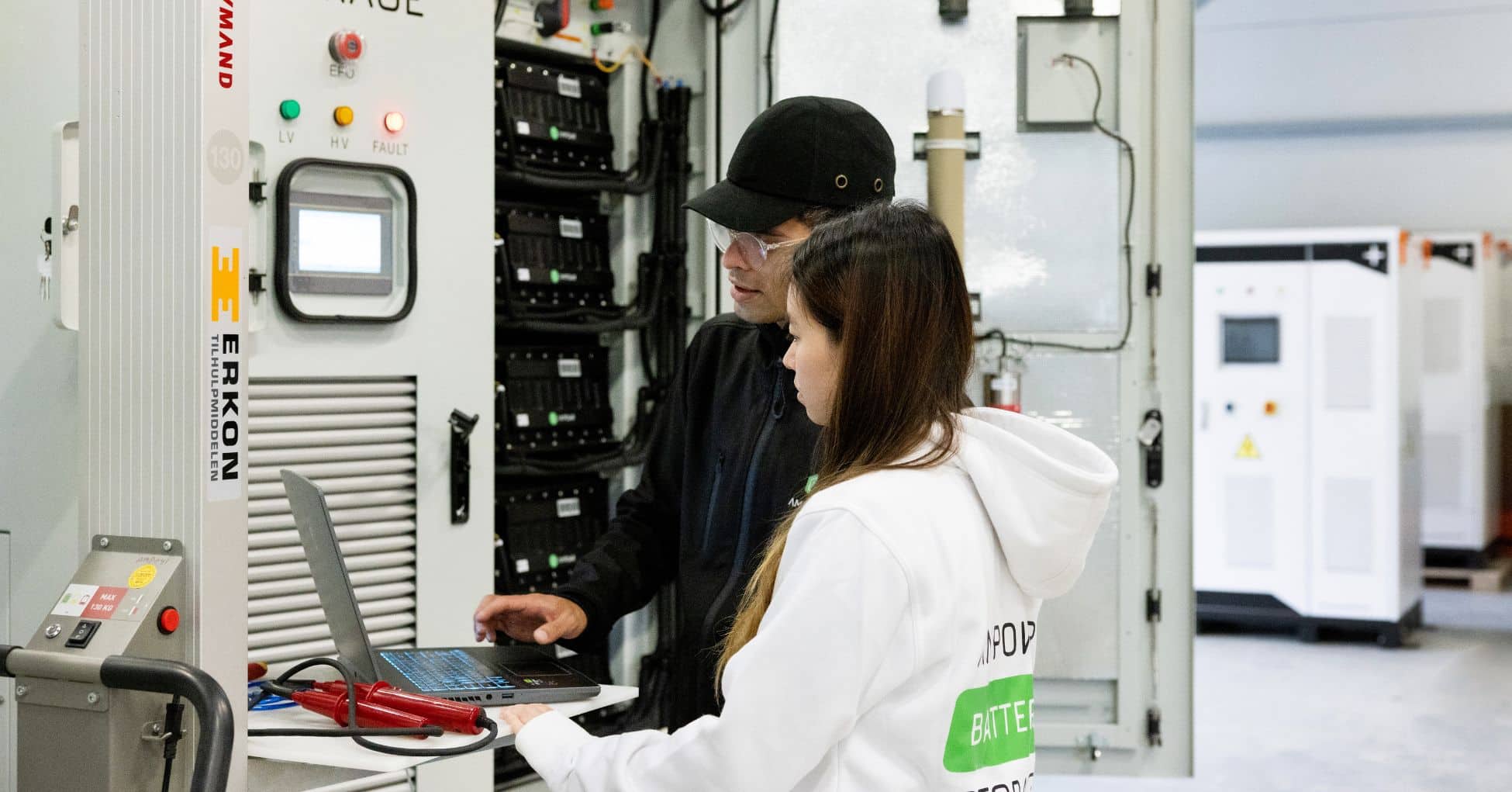
Sized against your connection, tariff, and resilience position
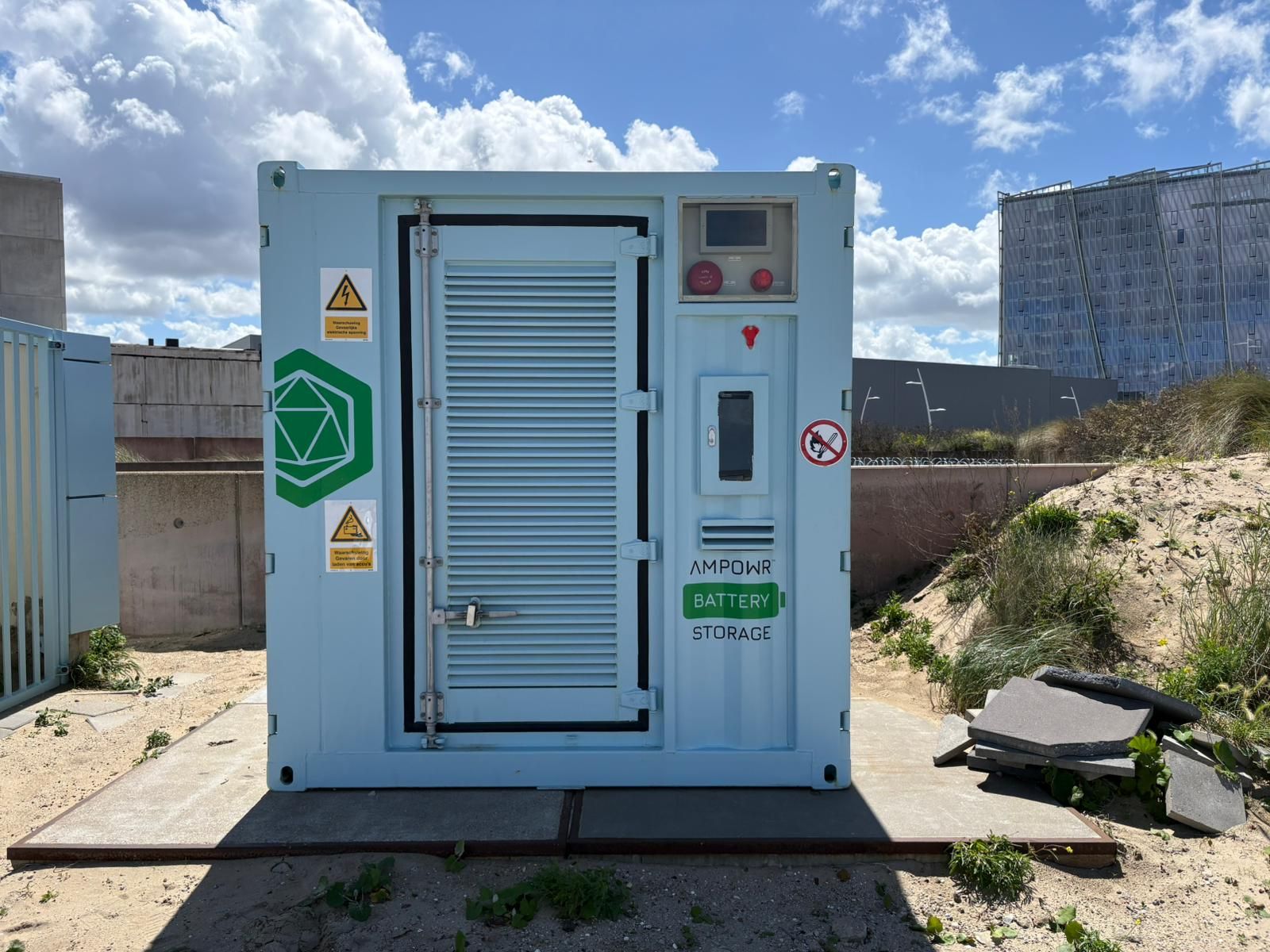
Battery systems for data centers
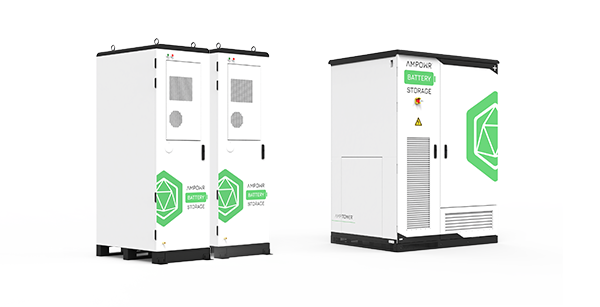
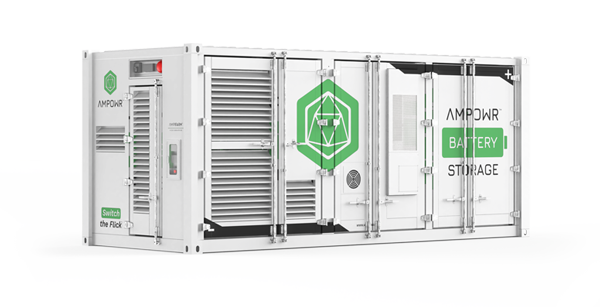
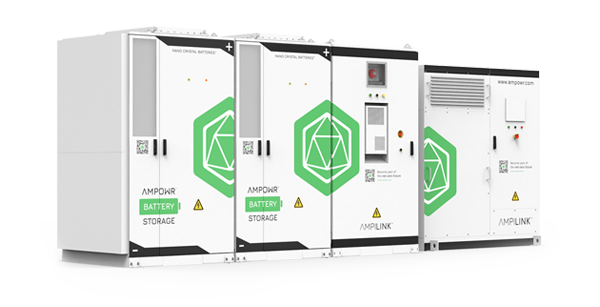
Delivered projects